State Budget

IN FOCUS: Keep TABOR out of North Carolina

House Bill 274, the so called Taxpayer Bill of Rights (TABOR), would cap growth in state appropriations to inflation plus population growth. This rigid and fundamentally flawed formula would force permanent cuts to education, public safety, health care and other key services that support our economy and quality of life.

Much of what makes North Carolina a great place to do business, including our educated workforce, would be undone by TABOR. In Colorado, the only state to have put the law into its constitution, TABOR did so much damage to key services that voters chose to suspend it. TABOR is a proven failure. Don’t force North Carolina down this same, dangerous path.

Learn more facts about TABOR here.

BTC BRIEF: Health Care Disparities and the Medicaid Expansion

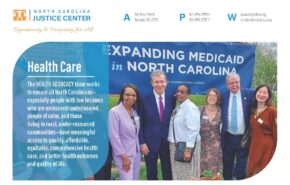
Racial disparities in health outcomes—as indicated by mortality rates, infant mortality rates, and other key health indicators—and access to health care, such as access to a primary care doctor, have persisted for many years in North Carolina, with inconsistent or little improvement under the current health care system. A greater share of people of color are uninsured than whites, and this lack of insurance is one reason for the continued disparities in access to health care in communities of color.

Under the Affordable Care Act, long-standing racial and ethnic differentials in health insurance coverage are poised to shrink due to the expansion of insurance coverage to hundreds of thousands of individuals and families, particularly through the Medicaid expansion. However, North Carolina must implement the Medicaid expansion responsibly and effectively in order to reduce racial health disparities and reap the benefits of improved health outcomes and resulting cost savings.

Read the full BTC Brief here.

FALLING BEHIND: North Carolina's Dwindling Investments

Many North Carolinians continue to face economic hardships following the Great Recession, the worst economic downturn since the 1930s. Although state leaders have a responsibility to aim to secure an improved economic future for all North Carolinians, the final FY2012-13 state budget reduces state appropriations for vital public services during a time of population growth and increasing demand.

Just how much is demand for services outpacing state funding? New analysis by the Budget and Tax Center shows that this gap is large and growing across major areas of the state budget, including K-12 and higher education, child development, Medicaid, and Aging and Adult Services.

Older Adult Services

North Carolina’s older population is growing fast, due to both the aging of the state’s Baby Boomer generation and in-migration of older adults to the state as a retirement destination. As a result, demand for older adult services – such as in-home care, group meals, and ultimately, long-term care – is projected to increase, but state funding for community-based services for senior citizens has declined over the Great Recession.

Medicaid

The Great Recession caused hundreds of thousands to fall into unemployment and related economic hardship, prompting a dramatic increase in the number of individuals eligible for Medicaid – many of them for the first time. However, the state’s share of funding for Medicaid declined significantly over the same time, with less federal funding to make up the difference.

K-12 Public Education

There are expected to be 31,000 more children enrolled in North Carolina public schools in the coming year than there were before the Great Recession, in FY2007-08, but state funding for public schools has dropped dramatically over this period – and never recovered. While federal funds were available to shore up the difference for several years, the last of North Carolina’s recovery money will be gone next year, leaving schools – and children – with fewer resources than before.

Community Colleges

In response to high unemployment and economic hardship, record numbers of North Carolinians turned to the state’s community colleges to enhance their education and learn new job skills over the Great Recession. Today, over 850,000 individuals take classes through the community colleges, but state funding has dropped despite unprecedented increase in demand.

Child Development

There will be more than 13,000 more children under the age of 5 in North Carolina next year than there were in 2007-08, but state funding for child development – including early care and education – has dropped dramatically over the past several years. Waitlists for child care subsidies and early childhood education – which were already long before the Great Recession – have only grown longer as a result of funding cuts to this vital investment in North Carolina’s future workforce.


ABOUT OUR STATE BUDGET WORK

The state budget is a reflection of North Carolina’s values and commitment to supporting economic opportunity and investing in the state’s future. The Budget and Tax Center produces rigorous analysis of state budget proposals to determine if they adequately fund public structures and services, particularly those that promote shared prosperity, quality education, and healthy communities.

Public Investments – Every year, the Budget and Tax Center produces a report on each of the state budget proposals—from the governor, the NC House and the NC Senate—and one on the final budget. We analyze the budgets to determine if they make adequate investments in education, health and human services, the courts and public safety, transportation and the environment. Legislators often refer to our analyses during budget debates, and public officials and progressive organizations throughout the state rely on our reports to help them understand the state budget and what it means for their communities and issue areas.

Fiscal Responsibility – The Budget and Tax Center is the only research organization that looks not only at what investments the state is making but also how it pays for them. In addition to our tax analysis, we look at how decisions about savings, fund transfers, and the use of one-time money affect the state’s long-term fiscal health. The Budget and Tax Center also monitors the transparency and accountability of the budget process.

Human Impacts – The budget makes a difference in our everyday lives and the vibrancy of our communities. The Budget and Tax Center works to engage with communities on the budget and its impacts and monitor and document how it is affecting North Carolinians.